
Safety, belonging and why legal recognition of identity matters
This morning, the Long View only has only thing on her mind, and that is: the UK Supreme Court ruling in For Women Scotland v Scottish Ministers.
For those of you who don’t follow legal matters or trans justice issues so closely, a brief explainer:
On Wednesday, the UK Supreme Court delivered a judgement in a case brought by a group of Scottish women against the Scottish government, in which the court determined that the definition of “woman” and “sex” in the Equality Act 2010 means, exclusively, “biological woman” and “biological sex”.
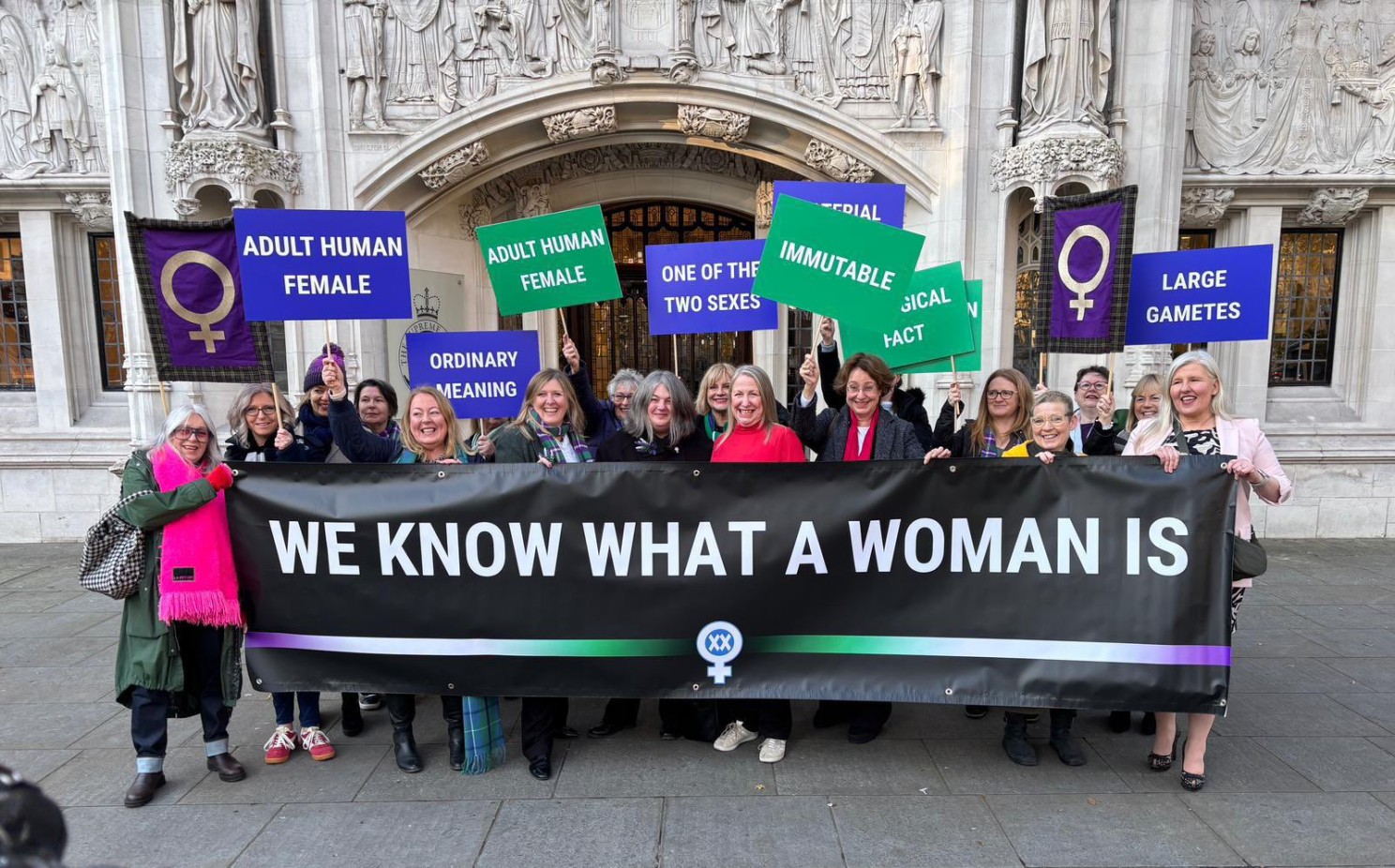
Why does this matter?
It matters because previously, the common legal and public understanding of the definition of “woman” – both in the relevant part of the Equality Act and in wider laws designed to promote equality and protect women from harm – was based in a gendered understanding of what it is to be a woman.
The majority of women’s organisations globally – including UN Women – adopt a gendered approach (and not a biological approach) to their work because decades of research, policy and activism have shown that a gendered approach moves us closer to the kind of equality we want to see in the world, for both genders.
What do you mean by “gender”?
Let’s try this thought experiment. Picture a young person in your life, a child or a teenager or even a young adult. Now bring to mind the things that worry you about the future of that young person – the things you want to guide them through, the things you want to protect them from.
Some of those fears will be gender-neutral – you might hope that they find a greater sense of confidence in themselves, that they learn to make and keep good friends, that one day, they find a loving partner.
But some of those things will be very gendered.
Can you give an example?
Sure.
For example, girls are (still) raised in Scotland with a social expectation that they will strive to be agreeable, cheerful and polite, attractive to males and suitable for holding caring and homemaking roles in their future families.
Boys are (still) raised in Scotland with the expectation that they will be bold, successful and strong, attractive to females and suitable for maintaining careers that will financially support their future families.
And gender norms – like many other types of norms – are not neutral because they exist in societies where power is unevenly distributed.
The further you step away from expected gender norms, the greater a risk of ridicule, humiliation, exclusion and harm you will face.
We know plenty of people – most of you who are reading this article, probably – who are living out roles in your work and family life which are much less binary than what I have just described above.
But have a think about the young people in your life, and what they are navigating in school today: girls who choose not to look “pretty” and feminine will be ridiculed and humiliated by fellow students (and possibly, also teachers) – and so too will boys who choose not to appear “strong” and masculine.
And because our young people are literally our future, in 2025, we cannot deny that gender norms continue to play a powerful role in society and are an important part of determining how equal our future world can be.
Legal frameworks that protect us against sex discrimination, actually protect us against gender discrimination ⚖️
Our legal frameworks which were designed to protect people against sex discrimination – such as Title VII of the Civil Rights Act 1964 (in the US) and the Equality Act 2010 (in the UK) – have largely been used to tackle discrimination on the grounds of gender.
Famously, one of Justice Ruth Bader Ginsberg’s most significant sex discrimination cases was taken not on behalf of a woman, but on behalf of a man, who was unfairly denied a tax break because he was a single unmarried man caring for his 89-year-old mother (and not a single unmarried woman). The law discriminated against him because he and his mother were not conforming to a gender norm – one in which unmarried women and not men cared for their elderly parents. In this case, RBG managed to prove that this discrimination was unlawful – as immortalised in the film based on this true story: On the Basis of Sex.
Therefore, I return to my previous point: until Wednesday’s Supreme Court ruling, the common legal and public understanding of sex discrimination was that we were talking about gender, and not (sorry, I do have to say this) genitals. 💡
So why is this a case about trans rights, and not women’s rights? 🏳️⚧️
Such a great question. The Long View has history on the For Women Scotland (FWS) case because JustRight Scotland supported the charity Scottish Trans in 2020 to intervene in the predecessor to this Supreme Court case.
FWS had challenged the Scottish Government’s decision to include trans women in the definition of “women” when selecting people to sit on Scottish public boards.
Yes, the Supreme Court case turns on something both as mundane and as significant as this: the FWS case is about whether or not, in meeting its own goal to have women make up at least 50% of people sitting on public boards – like Historic Environment Scotland and NHS Highlands – Scottish government agencies can include trans women in that tally.
This was a Scottish Government initiative, probably aimed at exercising a new power (to set a minimum quota for women on public boards) in an inclusive and thoughtful way.
No one asked me, so I’m allowed to speculate, but I’m guessing the reasoning was: if the goal of having diverse representation on public boards is to make sure that people with a wide range of experiences are part of the governance structures that keep our public services accountable, trans women have wisdom and insight to contribute about what it is like living as a woman in Scotland and interacting with public services, that should be welcomed.
Given the very modest number of trans women living in Scotland, and the smaller number still of women in Scotland who might consider applying for a role on a public board, the actual number of people affected was … also very modest.
Now. If that’s all this case was about, why would you challenge this decision? 🤷
More importantly, why in the wake of challenging this decision are people talking not about the women on Scottish public boards – but about the many other public places where trans people might face exclusion, lawful or otherwise, in the immediate future?
In short, exclusion of trans people from public places was – and remains – the end goal of the FWS litigation.
FWS were seeking change through the law – in this case, a judgment of the UK Supreme Court was the mechanism for change.
And did they succeed? What does the ruling mean for trans and non-binary people?
So I’m not actually going to answer that here, because there are plenty of trans and non-binary people out there who have done an excellent job explaining that already.
⚖️ If you want to learn more about the legal impact of the ruling, I recommend you follow the barrister Robin Moira White (she / her) who literally wrote the book “A Practical Guide to Transgender Law” and who has published clear and well-informed commentary in The Independent and The Guardian yesterday.
✍️ If you want to learn about the human impact of the ruling, I really loved this warm, reflective and passionate letter from Josie Giles on spending the day in the Pentlands, titled While the Supreme Court ruled, I tore up a fence.
🤝And if you want to keep up to speed with what you can do to support the community most adversely impacted by this rule, I would recommend you follow the Scottish Trans project at the Equality Network for news and updates.
❗But the important thing is: the UK Supreme Court made it very clear that trans people are still protected against discrimination and harassment both on account of their trans identity, and also where they suffer discrimination and harassment because of the sex or gender they are perceived to be❗
🛂 So why does legal recognition of identity matter?
Well I have a great deal more to say about that, but I trust you have to get on with your day.
So I’ll make it snappy:
People have always identified themselves in lots of different ways: I am a woman, I am a mother, I am Chinese-American, but also maybe a Scot, I am a lawyer, I am a reader, I am a ramen-noodle-eater,… I am, I am, I am…
Some of those ways have legal consequence (like being a mother, or a lawyer) and some do not (like being a reader, or a ramen-noodle-eater). Some statuses, like “woman” or “Chinese” “American” and “Scot” have mixed legal and non-legal consequence.
Sometimes the state (and other people) label you with that consequence, whether or not you choose it. Here is an article I wrote last year about being legally required to declare my race on my marriage certificate.
Legal recognition of identity, and cases like FWS v Scottish Ministers is important because the real battleground is about whether and how the state recognises our identities, which identities are recognised and for what purpose, who decides, and who those decisions serve.
I am honestly at a loss as to who is actually served by this week’s Supreme Court decision.
But I do know what is at stake, and why we need to continue to watch this space very carefully in the years to come:
We all have a stake in ensuring that rights and protections for disadvantaged and excluded groups – including trans people but also all LGBT+ people, disabled people, racialised people, migrants, religious minorities, the elderly, children and women and so on – are maintained or extended, and not narrowed.
Because legal recognition has real life consequences. The law will protect or harm you based on those legal identities. Belonging (legal recognition) is safety. And in a more equal world, we all deserve to be safe.
That would have been a simpler test, one that the court did not – in seriousness – apply.
But we can judge – for we are not the UK Supreme Court – in future, whether what a party is seeking to achieve, in their campaigning, their strategy, their tactics and ultimately their goals – seeks to increase or decrease safety for others.
And particularly, where someone seeks to use the law to harm others, we can call that out, for what it is. That is the least we can do. And what I hope we all continue to have the strength to do, for today, for tomorrow, and for always. 🌈
…
Thanks for reading The Long View again this week and my apologies for giving you a bit more down than up this week.
To make that up to you, I’m digging deep: this is my very favourite song when I was a child, I used to listen to it on my cassette tape, over and over. And I sang it to my children, relentlessly when they were young too: Kermit the Frog – The Rainbow Connection 🌈
First published on LinkedIn on 18 April 2025:
https://www.linkedin.com/pulse/safety-belonging-why-legal-recognition-identity-matters-jen-ang-f9qce


