Transcript: Equal Under the Law: Advice to my younger self (Pt 4)
Host: Jen Ang
Davie Donaldson
“So what I would tell a younger version of myself is what you’re seeing around you right now doesn’t have to be that way.”
Satwat Rehman
“Just be true to yourself in what you’re doing, you know, don’t be shaken from that. And be happy in what you do. Yeah, because we don’t struggle for the sake of struggle. We struggle for the sake of everybody having a better life, you know, and so that can’t just be about work and activism. We have to remember what it is we’re fighting for.”
Background music lyrics
“We’re musicians in exile and this is the song of hope saying…”
Jen Ang
Hey, everyone, welcome back – after a bit of a wee break, let’s call this a winter hibernation – to the Lawmanity podcast.
This week we’re marking the start of the new Lunar Year, the Year of the Fire Horse, as well as the start of Ramadan and of the Lenten season for those of you who celebrate it. For all of these great world traditions, the start of these periods mark a time for reflection, for reconnection and for renewal. We draw close to the people who are important to us. We evaluate the year gone past. We tell our stories, share our wisdoms, recommit to our values and prepare ourselves for the year coming.
I love these traditions. And in this cycle of human history, these dates also fall near the start of spring in the northern hemisphere: when the cold eases, the days start to lengthen, and we’re greeted by the earliest flowers – in my garden, snowdrops, crocuses and daffodils.
This year’s resolution for me and with the Lawmanity Project is to sow radical seeds – meaning to dedicate the year to supporting small actions that could lead to radically different futures for someone, somewhere, someday, every single day. And today, my offering to you listeners, with unending gratitude to the activists and friends who helped me to put this together, is an episode titled “Advice to My Younger Self”.
In today’s episode, we get to hear from a wide range of people who have dedicated their lives to challenging inequality and pursuing justice for others. And I asked them each this simple question: what advice would you give your younger self? Someone just like you, or perhaps someone who wants to be you. I found inspiration, laughter and a great deal of wisdom in their responses, and this is my very favourite episode to date. I hope you enjoy this as much as we have in putting together the show for you.
Let’s kick off with Davie Donaldson. Davie is a leading Travellers’ rights activist based in Scotland and started his career early at the age of 15, speaking out about the injustices faced by himself and his community – navigating a social, economic and legal landscape that was built for settled people and not in the interests of travelling people.
Davie Donaldson
An activist who I look up to in the civil rights movement is Harry Belafonte, right? And he’s famously quoted as saying, “I became an activist because I grew up in poverty,” right? And I think for me, that is a situation… I never chose to be an activist or a campaign or an advocate or whatever title I place on whatever it is that I do, right? But I grew up as a gypsy traveller in Scotland, and I think, by that experience, I recognised that something needed to change so that the next generation didn’t grow up in the way that I did, right?
So I think for anyone out there who is thinking about becoming a human rights defender or, you know, whether that be at the grassroots level as a community campaigner, as an advocate, as a human rights lawyer even, and, you know, moving into the legal profession, I think do it, right? If you’ve got that calling in you, then there’s something in your lived experience which recognises injustice as injustice, right? And that’s, that’s the basic point of it. You know, you don’t need a particular degree – or you will if you want to be a lawyer, right? But in order to actually campaign on these things, I think it’s important to just have that base level of, here’s where I’m starting from, here’s what injustice looks like and here’s how it needs to change. And that basic human relationship with justice is something which we can all tap into, whether or not we’re legally trained.
So what I would tell a younger version of myself is: what you’re seeing around you right now doesn’t have to be that way, right? It doesn’t have to be that way. You don’t need to experience the evictions that you’ve experienced. You don’t need to experience the hate, the discrimination, the… the barriers to your culture, to accessing the voices of your ancestors. You don’t need to experience that. And you have the tools, everyone does, in order to move forward and to change that for the next generation and for yourself. You know, let’s… let’s move into a place where we’re not just thinking about fifty, sixty, you know, hundred years, potentially down the line, you know, and the descendants to come.
Oftentimes indigenous communities, we fall into that perspective of, yeah, we’re doing this for the future. And it’s this quite indistinguishable, ungraspable future, right? Let’s do it for ourselves. You know, why can’t things change now? Why can’t we lead dialogue and conversation which can impact our communities and our families now? And why do we have to face these indignities and sacrifice our own sense of belonging, our own sense of justice, in order for the future? We shouldn’t have to sacrifice that. Let’s claim justice today and make sure that we ourselves can also experience what we believe justice should look like.
Jen Ang
So inspiring and so right. But what advice do our activists have for those of us who know that challenging injustice is important to us, but don’t know how to get started?
Sandy Brindley, chief executive of Scottish Rape Crisis, reminds us how frontline community activism, including volunteering, can make such a difference, not just to the communities we serve, but also to ourselves.
Sandy Brindley
I think in many ways I’ve been really fortunate about finding a passion. Like not, not many people have a job that they believe in so deeply where you feel like you are able to progress change as part of your job. So I think it is about finding your passion and what you believe in and trying to find a role that’s consistent with your values and with your passion.
In terms of becoming involved in Rape Crisis, like one of the best ways of becoming involved – and this is not accessible to everybody but – is volunteering, that’s how I started. I started as a volunteer in the helpline. That has been so invaluable to me, that experience, I did that for a number of years. Just that is where you learn, is you learn from speaking directly to survivors. I believe really strongly that’s how legal strategy and policy has to work, is if it’s directly informed by survivors voices. So if this is the work you want to do, your starting point for me is supporting and listening to survivors. And then, I think that then gives you the answers to what needs to happen, which then I think informs your trajectory of how you want to change the world, really.
Jen Ang
Great. But what if you don’t know where exactly your passion lies? Here’s some advice from Talat Yaqoob. Talat is a Scottish political commentator, feminist campaigner and co-Chair of the First Minister’s National Advisory Council for Women and Girls. Her top tip? Stay open to unlikely opportunities.
Talat Yaqoob
Okay, so the somewhat facetious response is sunscreen and moisturiser – and I do wish I had gone back and said that to myself.
I think, what’s really interesting is that this is not a… I didn’t know this was a career. At no point did I think this was a career. If I was to follow what it was that I thought I’d be doing at the age of 18, I should be a clinical psychologist right now. And so I guess the advice would be if an opportunity presents itself and it lights something, even if it’s not on the plan, do it. Because I very, very easily, and very closely didn’t do it because I was like, well, I’ve got a five-year plan and I meant to go and do a master’s and then I meant to go and become a clinical psychologist and I meant to do my doctorate and… and I, I almost didn’t do it, but then, you know, at university I realised that actually, hold on, my politics has been given an outlet and there are these really great people that I’m able to have conversations with and we’re debating and nobody’s telling me shush, like, like they do at the dinner table at home. Like it’s not. And, and had I not taken that opportunity, that feels kind of exciting but isn’t in the plan, isn’t the status quo, nobody before me has done it… I wouldn’t get to do what I do now. And as hard as it is and sometimes as upsetting as it is, I wouldn’t want to be anybody else, I wouldn’t want to be doing anything else.
So even if it’s not on the plan, it’s not in the five-year plan or the ten-year plan – and if you’re, you’re like me, you probably have one – if it feels good and it feels exciting, give it a try. Especially if it maybe is a little bit uncomfortable. I would advocate for that because 100% I would not be doing anything that I did if I didn’t go to become, ah, my student union and suddenly get involved and find really awesome people and then suddenly get involved in other campaigns and yeah, give it a try. Even if it’s temporary, it’s something worth learning.
Jen Ang
And once you’ve taken that unlikely opportunity, gotten yourself a seat at the table, then what?
Let’s hear from one of my very favourite people in the world, Andy Sirel: partner and legal director at the charity Just Right Scotland, and my colleague for many years.
Andy is a legal expert on human rights, children’s rights and migrants’ rights and has led groundbreaking litigation and campaigns in all these areas.
I first met Andy when he was himself a young activist and lawyer, and his advice here rings true to how he has grown and shaped a very successful career in law and human rights.
Andy Sirel
You need to be positive. You need to look for opportunities where other people see negatives. And I think that is something that not everyone’s able to do, but we can if we try.
And, if I’m honest with you, you need to treat everybody, regardless of who they are, regardless of status or position or seniority or age or anything, you need to treat everybody the same with dignity, courtesy, interest. And not only by doing that do you learn a lot, you obtain people’s trust and you’re honest and then doors open and opportunities present themselves. But only by doing that do you get their trust. And that is actually, you know, things go from there. So those are the sort of very simple pieces of advice I would give.
Jen Ang
And what if you’re in the room, have something to say and you start feeling the fear?
Let’s hear next from Lily Greenan. Lily’s career in Scotland has encompassed feminist activism in the violence against women and girls movements. And from 2006 to 2015 she was the chief executive of Scottish Women’s Aid.
In her early career, along with other lesbian and gay rights activists, she also led opposition to Margaret Thatcher’s anti-gay Section 28 law. Towards the end of this quote, she mentions Lark in the Park, which was the first major public gay rights event in Scotland, taking place on 28th May 1988 in Edinburgh.
Here’s Lily on her advice to young activists.
Lily Greenan
I think advice from my younger self would be be less afraid. Yeah, I was anxious 20-year-old, for lots of reasons. And since then… I didn’t grow up in a religious household, but I heard someone who was Quaker talking about the feeling of being moved to speak in worship, in a meeting for worship, which is a silent meeting unless someone feels moved to speak. And someone who I knew well described it. And I thought: oh, I, I know that feeling. And it’s that I was anxious and worried about doing the wrong thing in whatever context, socially and academically and like whatever, I worried about doing things wrong. And I would still be a bit plagued by that after I got involved with Rape Crisis, and other sort of bits of activism. So what would happen is that I would be really wound up, really anxious and then I would just have to speak. And my back used to spasm. It was that extreme. Like I would stand up and speak and when I sat down my back would be in spasm because I was so wound up.
And I think I would love it if younger people coming into this kind of work, could learn ways to be more relaxed about it, because it really wasn’t that big a deal, most of the time. I think it held me back from doing maybe more than I did and, you know, and I got past it, but it took a while.
And the other is write stuff down. I’m sitting in my attic office at home, looking at the archive boxes that I have to sort. I’ve been keeping… I wouldn’t call it a diary – I keep notes at meetings, I take notes at meetings. It’s partly because I’ve always had a bit of a shit memory, so I needed to be able to remind myself what. And what I have realised over the last few years is that I can go back and find the notes from that meeting in 2010 and, you know, something will happen. It allows me to connect the dots. If I need to, I can go back and check, you know, like, that’s there. I don’t know what I’m going to do with them because there’s quite a lot of notebooks. But they’re a useful personal archive and a resource about how the different areas of the work connect up. Because they’re not just about, they’re not just notes I took in meetings I was being paid to attend. I’ve been doing it, you know, sort of since the early 80s. And, yeah, or find, find some way to, to document what you’re doing and to be able to go back now and again and remind yourself that you’ve learned a few things since then. And that you maybe wouldn’t approach the problem in quite that way now. But also there’s some good ideas in there that you forget because you move on and you do other things. So there’s something that I would encourage people to document and not just for ourselves.
There are areas of our activist histories that are just not visible. The Scottish Homosexual Action Group, I went looking for some information about Lark in the Park and it’s attributed to the other more established group, as the group that organised it on Wikipedia, because the Scottish Homosexual Action Group wasn’t that organised with documenting. So I’m going to learn how to edit Wikipedia, so I can fix that because… you know, it’s a small thing, but I was like, they didn’t do it, we did that, you know. And I, thought, yeah, okay, it’s, it’s worth taking some notes and, for… well, for future generations as well, you know, there are libraries.
I hope that we will always have libraries of some sort, and we need to be able to learn what worked and what didn’t work. So even if it’s not stuff that’s going to be published, being able to share it somehow, finding a way to share what you’ve done that worked that was successful, and what you did that just landed flat and left everyone feeling a bit yuck because activism, you mentioned joy earlier and yeah, the picnic in the park was all about… like we’re going to have a party, they’re telling us we’re not real, we’re going to have a party. And finding ways to hold on to those bits of joy and successes is worth it. Other people need to know.
Jen Ang
Something that all our activists recognise is that caring about the world and trying to change it is hard. And the more visible you are, the more you personally and voluntarily shoulder the burden of sticking out, saying different, being perceived as different, and sometimes suffering for it. How to cope with that?
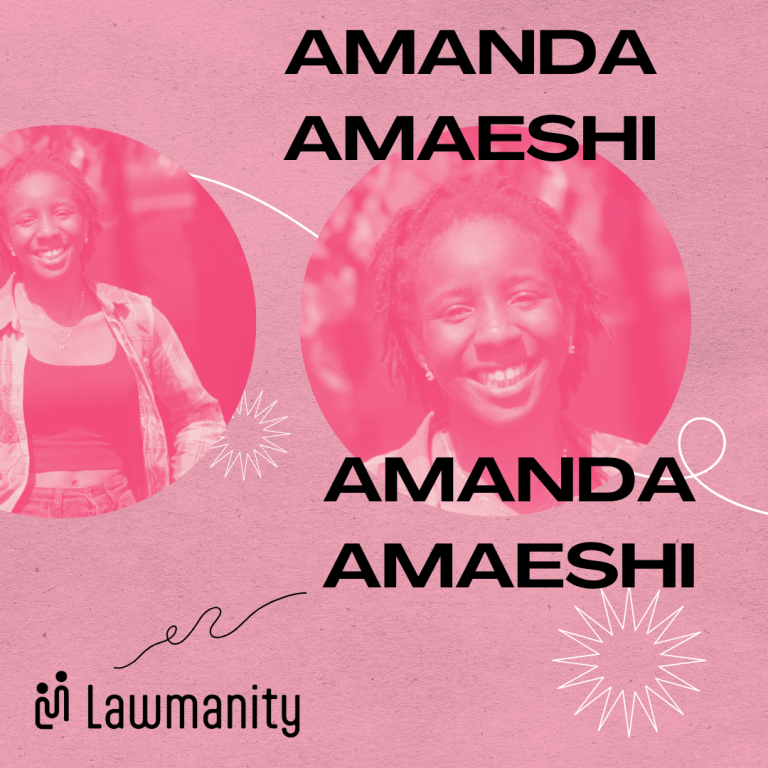
Here’s some wise words from Amanda Amaeshi. Amanda is an award-winning activist, campaigner and writer who focuses on gender inequality, anti-racism and youth voice and political participation. She’s been an activist since her teens with the Girlguiding movement and has recently graduated from the UCL with a degree in law.
Amanda Amaeshi
This is a really lovely question and actually I remember last year I wrote an article all about this actually for The WOW Foundation, giving my advice to aspiring changemakers… and then the key points related to identifying one’s key interests and goals, finding the opportunities, building community, dealing with imposter syndrome – especially when you’re doing quite big roles like being on the National Advisory Council – and then also resisting that fear and apathy. So I would definitely encourage interested listeners to check that out. Perhaps that could be linked in the show notes.
But I wanted to mention one other thing that I feel like I’ve not spoken about elsewhere before. Something new. Sometimes… especially when I’m thinking about younger me, maybe what 14, 15-year-old me would have wanted to hear when I first started doing this activism, advocacy stuff properly is that sometimes not everybody is going to understand why you care so much or why you want to do the actions that you’re doing. I mean, to be fair, a decent amount of people will, this is not to be off putting. I guess the reality is that some people might try to mock you, make fun of you, try to belittle you in the hopes that you might stop doing whatever it is that you’re doing and it can be quite disheartening to be honest. But I think it’s important to remember that advocating for change is never easy. And kind of like facing such remarks from other people is just one part of how it might not always be easy.
But it’s really important to try not to let that get to you and just stay true to the value system that’s guiding you. Keep in your mind the changes that you wish to see, which again why I said that, think about the problems, we also have to think about the solutions as well, the ideal scenario, and keep in focus the changes that you wish to see which are possible. Don’t let anybody tell you otherwise and find yourself a community of changemakers who you can learn from, who you can seek support and solidarity from, and put in your best ability, and… don’t let other people’s small minds limit your imagination.
Jen Ang
Don’t let other people’s small minds limit your imagination. Love that so much.
Need a little more advice to bolster yourself against those doubts that creep in, those tiny criticisms from others that amplify in your mind and the self-doubt that so many of us never really shake? Let’s hear next from Pheona Matovu.
Pheona is a social entrepreneur and co-founder of Radiant and Brighter, an anti-racist educator and advocate. She is completing a PhD at the University of Glasgow on how workplaces can take actions against racism and has also recently published a book, the Radiant and Brighter Antiracism Journal. Pheona talks to us about turning 50 and the realisation that the biggest and most important job is that you can have is learning to be you and then to be more you.
Pheona Matovu
One of the things that happens when you take a challenging journey or when you get to the age I am, which is, for those who will be listening, I made 50 this year. So can I just say, when I talk about making 50, I speak about it with, with appreciation. I know that people usually are cautious about their age. But just before I made 50, a few people I knew personally, left and they’re no longer with us and I became more appreciative and I started to think I’m glad that I am here at 50. So that’s why I have made a big deal of it than probably anybody else I know!
But when you get to the age I am, you realise all that all the while it was okay to just be you, just be you. And also, and I completely and totally believe, it’s important to have integrity and to be authentic. Now some of the things that we, that I’ve had to be part of, they’re great things, they’re amazing things… there is a stage at which you need to know who you are and make decisions based on what you believe in. If you don’t focus on understanding and knowing yourself and the values, or you don’t get the opportunity to, because of circumstances or situations or the environments we find ourselves in, which is which… it’s difficult to know who you were when everything is screaming at you and trying to make you somebody else and to be who you were when you have to… you know, try and work within an environment that does not perhaps accept you or… but I think it’s okay to remove yourself from situations, people, environments that seek to fix you when you, when you are okay.
So I would say be you. If you don’t know who you are, take time to know who you were. Allow yourself to just know yourself and be you. And at this age, it’s something that I am learning still, but it’s a very powerful tool because you don’t have to try and be somebody else. You don’t have to try and fight things a certain way. Some people fight a certain way, others fight in different ways, others don’t fight at all. Others do not have the tools and what they need to fight. And it’s okay. It’s just okay. Just okay.
Jen Ang
Oh, are we feeling emotional yet?
As I mentioned earlier, putting together this episode has been such a treat. A little bit like writing a collective love letter to ourselves as young activists, and also to those people out there, young or old, who are just starting out on your activism journeys.
So when the going gets tough and you need a little encouragement, where do our activists turn for help? To each other, of course.
Here, Heather Fisken, chief executive of Inclusion Scotland, reminds me of why we loved working together so much and why we worked so hard to do that for many years, even without formal funding or support.
Inclusion Scotland is Scotland’s umbrella organisation for Disabled Peoples, or DPOs, which is something that Heather mentions when she gives this advice.
Heather Fisken
Just keep doing it, keep doing it. If you are in the right, then be in the right, own it, own your space and collectivise with other people. The strength in collectivising, not just within your own community, but with allied communities. And Jen, you and I go back some way, and I’ve always wanted to do more work in our organisation around justice, but like many DPOs, we don’t have the funding. I think that the digital world has really opened up activism, in a low-cost kind of way, but just keep going for it and collectivise. Use your allies, give to your allies as well. You never know when you’re going to need them. And just keep going. If you’re in the right, then you’re on the right path, basically.
Jen Ang
And following on from Heather, Tressa Burke, Chief Executive of the Glasgow Disability alliance, agrees wholeheartedly.
Tressa Burke
Oh, my goodness, that’s a hard question. Run a mile! Don’t do it.
No, I think, know that you can’t do everything. Do what you can and don’t do it alone. Build allies, build friends, build support. I think, really, I feel, I feel as though I’m a builder, you can see that because GDA has almost 6,000 members now. And it’s not just me, it’s never been just me, it’s always been a collective cause. And I think that holding onto that peer support is so important. It’s important to our members, but it’s also important to chief execs supporting each other. To me, with my team supporting each other, you know, we don’t get dissuaded from the cause and from the mission, and we support each other doing it.
But the other, I suppose, piece of advice would be, to myself. Don’t get too upset when you know you’re going to get knocked down, but just get back up. Just keep getting back up. But you need support to do that and that’s why the support is so important, because you can keep going if you’ve got the support, but if you’re doing it all alone or if you feel that you’re taking it all on your own, that’s too much. So definitely, I think support is the big part of it and keeping getting back up. Because the thing is, you absolutely will get knocked down. You’ll be slapped down some of the times, you’ll be knocked down some of the times. I’ve had it all. But, yeah, keep going, it’s worth it, it’s worth it because you’re helping people change their lives and have a better life.
Jen Ang
We’ve stepped now into advice around resilience, and this seems like the perfect time to bring in Satwat Rehman. Satwat is a feminist, anti-racism activist and Chief Executive of One Parent Family Scotland, the leading charity working with single parent families in Scotland.
Satwat Rehman
Don’t doubt yourself all the time. Yeah, that would be my first thing. And, you know, shake off that imposter syndrome. You’ve got a right to be there and as much of a right as anybody else, you know. We’ve all taken different paths to get to where we are. And I didn’t set off on my sort of work journey thinking this is where I want to end up. But I’ve always… and I think, yeah, I suppose this for me would be the most important advice: just be true to yourself in what you’re doing, you know. Don’t be shaken from that. And be happy in what you do. Yeah, because we don’t struggle for the sake of struggle; we struggle for the sake of everybody having a better life, you know, and so that can’t just be about work and activism. We have to remember what it is we’re fighting for.
Can I just say one thing? There’s not a meeting I don’t go into without suffering from imposter syndrome still. Well, I was… weekend before last, I went down to London to go to see Massive Attack in concert. And at the start of that, the wonderful actor, Khalid Abdullah, who’s been speaking out on Palestine since the word go, gave a five-minute speech which was absolutely amazing. And one of the things he said towards the end was: I know it’s hard for you to think about enjoying yourselves and relaxing and dancing because so many of you have been so active on Palestine and continue to be so active on Palestine, but it’s important that you do so. It’s important that you remember why we struggle and why we campaign.
Jen Ang
I love how Satwat talks about finding resilience and joy in community and celebration, which feels like a fitting way to bring us back to where we started, marking the new Lunar Year, the start of Ramadan and the start of the Lenten season.
So to conclude, I leave you with some final words from Alison Pickup, award-winning barrister and Executive Director of the Helen Bamber Foundation Group, who work for the rehabilitation of survivors of trafficking and torture.
Alison Pickup
I think my number one piece of advice is don’t hurry. Like, I think when you’re young and enthusiastic, you can be very impatient to get on with your career and with achieving big things. But, there’s plenty of time and what’s important is to really take time to know what you enjoy, what motivates you, where your skills are and focus on that area.
So for me it was a very gradual path. You know, I started as a caseworker. I realised that I really enjoyed being an advocate in court and so I ended up qualifying as a barrister. And then, you know, after having practised for kind of nearly 10 years, I then decided I wanted to move more into the NGO world.
And so, like, I just think, don’t hurry and take your time and learn and learn what’s good. And the other one I would say is, colleagues, partnership network, is really important. You, this work can be really challenging emotionally as well as stressful. It can be very tiring. You can’t do it alone and you need to build that network in, you know, in your workplace, with colleagues in the sector, with people who don’t work in this world at all in order to have, like, really good support around you and people who understand what drives you, who are there for you when things get tough is really important.
Jen Ang
Wow. I hope you’ve loved this episode as much as I have and that we have brought some warmth, solace or inspiration into your day and maybe even sown some radical seeds with you.
And so concludes today’s episode in which a number of activists and friends have shared with us their advice to their younger selves and for you, all of you.
Meanwhile, a very big thank you to Davie Donaldson, Sandy Brindley, Talat Yaqoob, Andy Sirel, Lily Greenan, Amanda Amaeshi, Pheona Matovu, Heather Fisken, Tressa Burke, Satwat Rehman, and Alison Pickup for their contributions to today’s episode.
And thanks so much to you, the listeners, for tuning into our Lawmanity podcast again in the new year and for this, the last of our special series on Equality Under the Law in Scotland.
If you loved this podcast, please do hit the subscribe buttons and also like and share our episodes with friends and colleagues who might enjoy learning a little bit about how law really works in practice and how it can be used to make the world a better, brighter place.
Our ‘Equality Under the Law’ series has been generously supported by a grant from the Atlantic Fellows for Social and Economic Equity, hosted by the London School of Economics. The Lawmanity podcast is co-produced by me, your host Jen Ang, and by the brilliant and talented Natalia Uribe. And the music you’ve been listening to is “Always on the Move” by Musicians in Exile, a Glasgow-based music project led by people seeking refuge in Scotland.
Thanks so much for tuning in today, we hope you enjoyed listening, and see you next time!